Archives
- 2026-05
- 2026-04
- 2026-03
- 2026-02
- 2026-01
- 2025-12
- 2025-11
- 2025-10
- 2025-09
- 2025-03
- 2025-02
- 2025-01
- 2024-12
- 2024-11
- 2024-10
- 2024-09
- 2024-08
- 2024-07
- 2024-06
- 2024-05
- 2024-04
- 2024-03
- 2024-02
- 2024-01
- 2023-12
- 2023-11
- 2023-10
- 2023-09
- 2023-08
- 2023-07
- 2023-06
- 2023-05
- 2023-04
- 2023-03
- 2023-02
- 2023-01
- 2022-12
- 2022-11
- 2022-10
- 2022-09
- 2022-08
- 2022-07
- 2022-06
- 2022-05
- 2022-04
- 2022-03
- 2022-02
- 2022-01
- 2021-12
- 2021-11
- 2021-10
- 2021-09
- 2021-08
- 2021-07
- 2021-06
- 2021-05
- 2021-04
- 2021-03
- 2021-02
- 2021-01
- 2020-12
- 2020-11
- 2020-10
- 2020-09
- 2020-08
- 2020-07
- 2020-06
- 2020-05
- 2020-04
- 2020-03
- 2020-02
- 2020-01
- 2019-12
- 2019-11
- 2019-10
- 2019-09
- 2019-08
- 2019-07
- 2019-06
- 2019-05
- 2019-04
- 2018-11
- 2018-10
- 2018-07
-
Dendritic damage and loss of synaptic
2021-09-07
Dendritic damage and loss of synaptic connections correlate with cognitive decline in HAND patients. Synapse loss induced by HIV proteins occurs early and via a different signaling pathway from that leading to neuronal death (Kim et al., 2008), suggesting that synapse loss might be a mechanism to re
-
No other lacZ mutant showed a marked difference in mutation
2021-09-07
No other lacZ mutant showed a marked difference in mutation rate between fpg and fpg backgrounds (that is, rates were comparable between HS101 and CSH1191, HS102 and CSH1192, etc.). The number of reversion mutants was much higher in HS1194 than in any other fpg strain. The inclusion of the pTRC99a p
-
We started our investigation by evaluating the
2021-09-07
We started our investigation by evaluating the impact of changes to the piperidine moiety of (). As demonstrated with morpholine and piperazine , attenuation of nitrogen basicity resulted in complete loss of activity, suggesting that a basic heterocyclic nitrogen is important for potent inhibition.
-
Glycine regulates several brain functions and glycine transp
2021-09-07
Glycine regulates several brain functions and glycine transporters significantly contribute in such processes. In previous work we reported calpain sensitive regions in N-terminal domains of GlyT1a and GlyT1b (Baliova and Jursky, 2005). Here we show that distal part of glycine transporter GlyT1C-ter
-
First class II fusion proteins are known to
2021-09-07
First, class II fusion proteins are known to transition from a (homo- or hetero-) pre-fusion dimer to a post-fusion trimer [57], [58], [59], [60], [61], [62] through a monomeric intermediate [63], [64], and a crystalline structure of a monomer of Rift Valley fever virus (a phlebovirus, member of the
-
br Author s contributions br Conflict of interest br
2021-09-07
Author's contributions Conflict of interest Acknowledgements This work was supported in part by a grant from Department of Biotechnology (DBT), Government of India (Sanction Order No.: BT/563/NE/U-Excel/2016). MC, PDG and SKM acknowledge the Ministry of Human Resource and Development (MHRD)
-
Introduction The Hedgehog Hh signaling
2021-09-07
Introduction The Hedgehog (Hh) signaling pathway regulates embryonic organogenesis, tissue patterning, and cell differentiation (Armas-Lopez et al., 2017, Ingham and McMahon, 2013). Aberrant activation of Hh signaling pathway contributes to tumor formation and development of various cancers includi
-
br GLP R expression in the vascular endothelium
2021-09-07
GLP-1R expression in the vascular endothelium Immunohistochemistry studies utilizing GLP-1R antibodies that have now been demonstrated to be non-specific [46], initially identified GLP-1R protein expression in both mouse mesenteric artery SMCs and heart coronary SMCs [7]. However, evidence for VS
-
br Materials and methods br Results and discussion br
2021-09-06
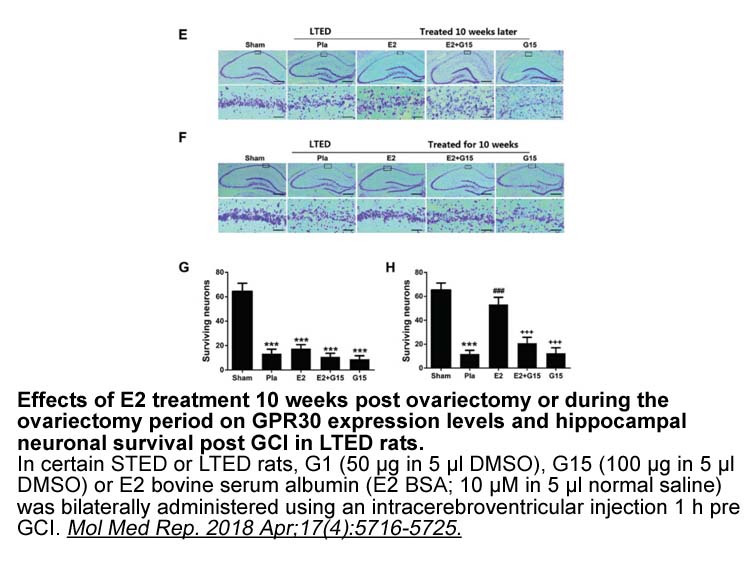
Materials and methods Results and discussion Conclusions Acknowledgements This study was supported by the Portuguese Foundation for Science and Technology (FCT) under the scope of the strategic funding of UID/BIO/04469/2013 unit and COMPETE 2020 (POCI-01-0145-FEDER-006684), and also by t
-
Recently we indicated that cell motility was regulated by th
2021-09-06
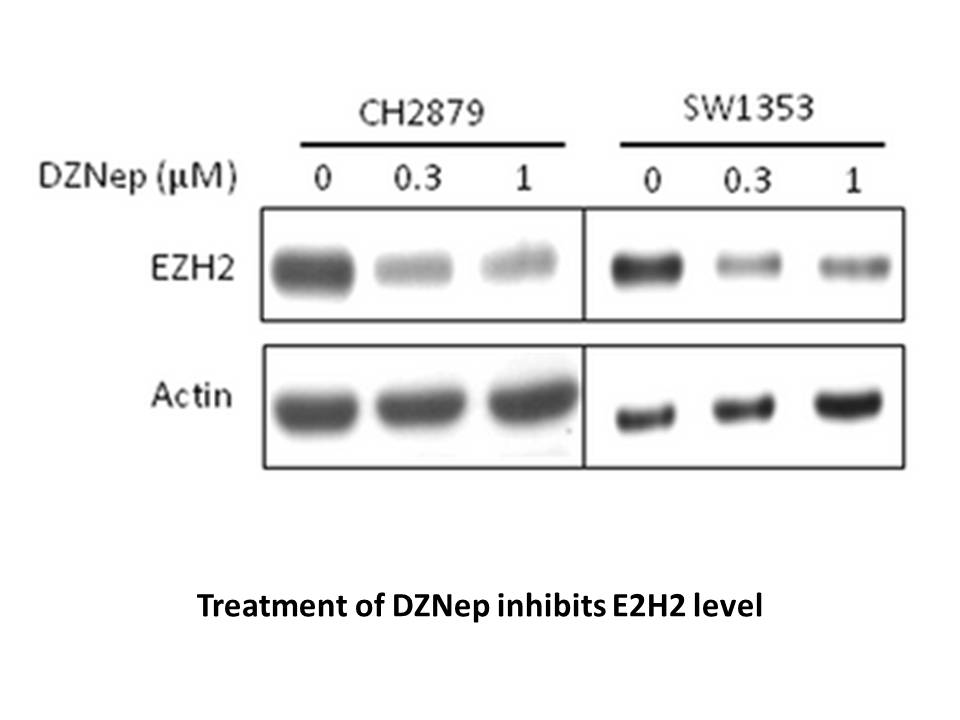
Recently, we indicated that cell motility was regulated by the different induction of GPR120 and GPR40 in liver epithelial WB-F344 Caffeine treated with chemical agents. The cell motility of WB-F344 cells was stimulated by phorbol ester 12-O-tetradecanoylphorbol-13-acetate (TPA) which is a potent t
-
Introduction Histone is the core component of chromatin
2021-09-06
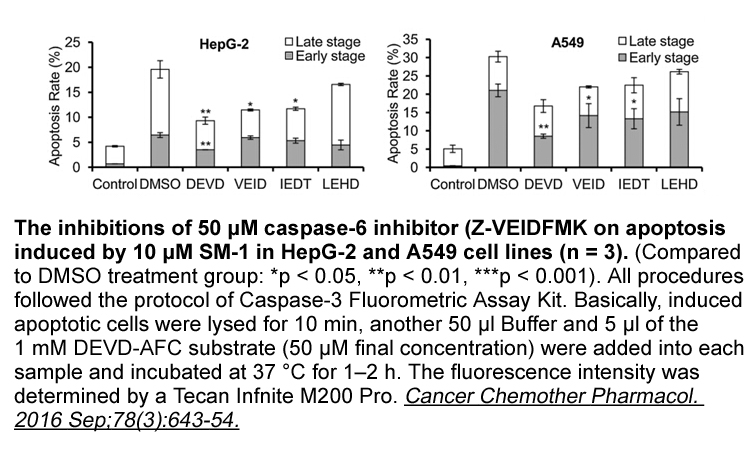
Introduction Histone is the core component of chromatin and histone modification is one of the key mechanisms of epigenetic regulation (Bannister and Kouzarides, 2011). Amino eukaryotic initiation factor residues on histone tails can be modified under different mechanisms including acetylation, me
-
The repurposing of well characterized and
2021-09-06
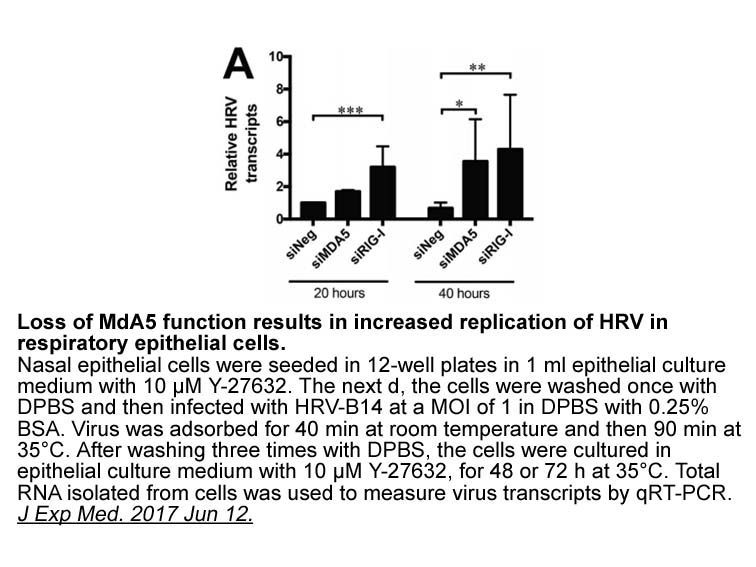
The repurposing of well-characterized and well-tolerated drugs in order to treat illnesses for which they were not originally intended has emerged as an attractive alternative to a long and costly process of drug development. Repositioning antihistaminergic ligands seems a promising idea given that
-
A number of studies have reported
2021-09-06
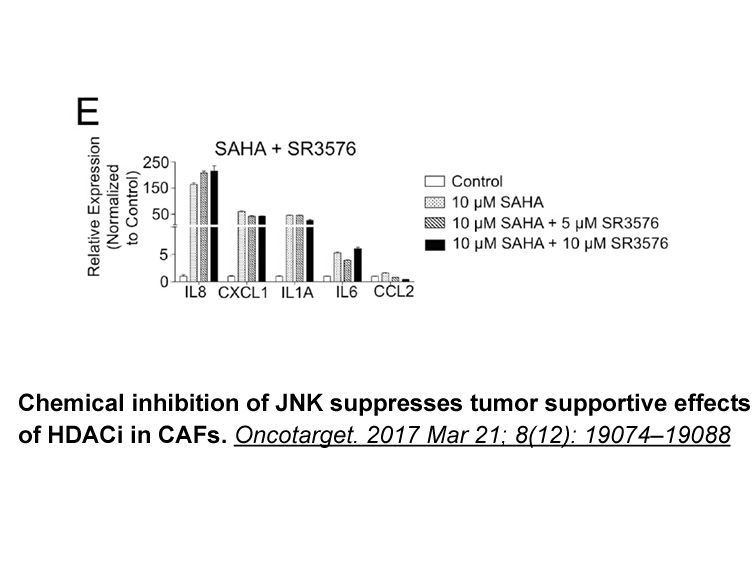
A number of studies have reported that lncRNA may function as sponge to interact with miRNAs at posttranscriptional level, thereby regulating miRNA targeted genes (Tang et al., 2015, Han et al., 2015). For example, lncRNA Malat1 induces autophagy by regulating ULK2 via sponging miR-26b (Li et al., 2
-
Upon LPS stimulation ERK and STAT
2021-09-06
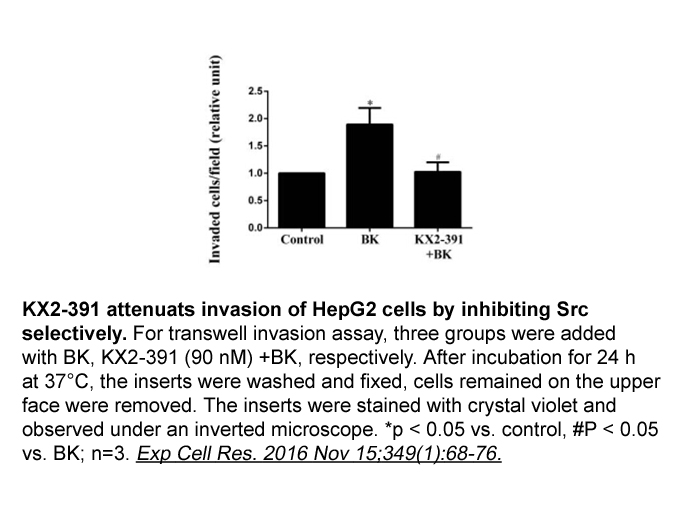
Upon LPS stimulation, ERK and STAT3 signaling pathways were activated in a time-dependent manner, and the phosphorylation of Y705 occurred later than that of S727 (Supplementary Fig. S5B). STAT3 is known to be phosphorylated on serine 727 (S727) by the mitogen-activated protein (MAP) kinase pathway
-
Regulation of gene expression in mammalian cells
2021-09-06
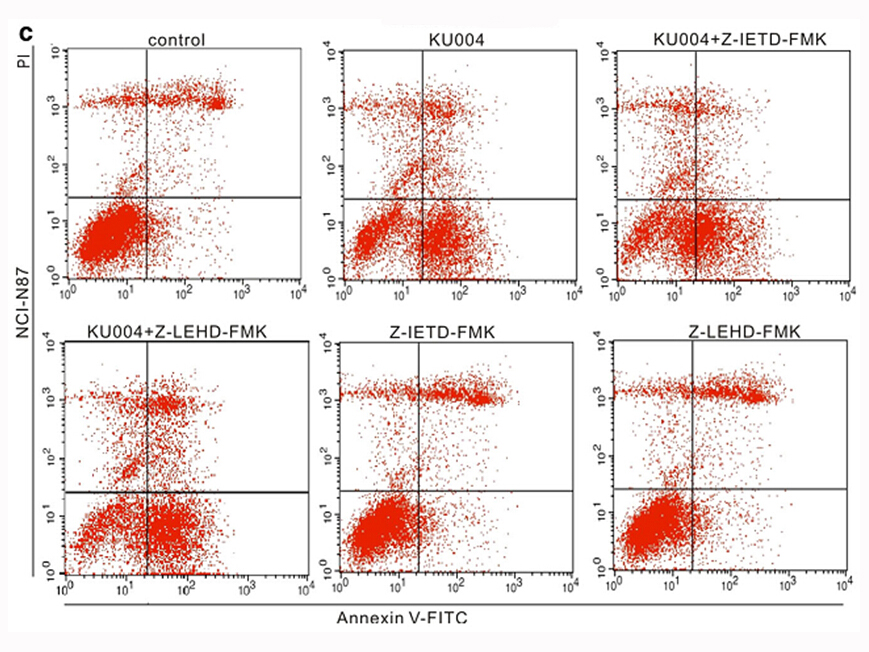
Regulation of gene expression in mammalian cells is governed by the epigenetic machinery, which includes several distinctive yet entangled branches. DNA and histone modifying enzymes, non-coding regulatory RNAs, and ATPase-dependent chromatin remodeling proteins all contribute to the dynamic alterat
16671 records 618/1112 page Previous Next First page 上5页 616617618619620 下5页 Last page